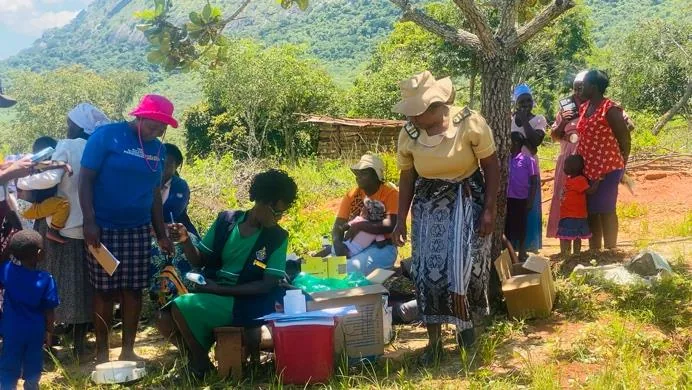
Honzo mobile outreach clinic
Heavy rain and slippery roads forced a partial postponement, but community members who reached the site on the scheduled day were still seen.
| Service | Male | Female | Total |
|---|---|---|---|
| Health education | 16 | 72 | 88 |
| Non-communicable diseases | 22 | 76 | 98 |
| HIV testing & counselling | 4 | 10 | 14 |
| OI / ART | 0 | 0 | 0 |
| Growth monitoring | 13 | 11 | 24 |
| Immunisation | 1 | 2 | 3 |
| Family planning | 0 | 8 | 8 |
| Antenatal care | 0 | 0 | 0 |
| TB screening | 0 | 0 | 0 |
| OPV (oral polio vaccine) | 0 | 0 | 0 |
| Cervical cancer screening | 0 | 0 | 0 |
| Eye conditions | 2 | 6 | 8 |
| Total services | 58 | 185 | 243 |
Grocery hampers for elderly caregivers
Mrs Mahachi and friends donated grocery hampers for 30 households headed by elderly caregivers of orphaned and vulnerable children. Each hamper held sugar, flour, salt, soap and matches. Families came from Ruwende, Mawadza and Hombe villages in Ward 12.
Keep a Girl in School and skills training
Four girls are supported through the Keep a Girl in School campaign at Mbaza High, Domborutinhira Secondary and St Columbus. Six young people are in skills training or tertiary study: five young women in electrical repairs and garment construction, and one young man studying education.
Challenges
- Gaps in sharing outreach schedules meant some people did not hear about the clinic in time.
- Few men attended outreach health services.
- Antenatal care, TB screening and cervical cancer screening were under-used.
- Unpredictable weather led to postponements and reduced coverage.
- Limited resources capped the number of learners reached through Keep a Girl in School.
- Medication supplies did not meet demand at outreach clinics.